You run your fingers through your hair and a few strands come out. You look at your pillow in the morning and there is more hair than usual. The drain in the bathroom clogs every other week. If this sounds familiar, you are not alone.
Hair fall is one of the most common reasons people visit a skin and hair clinic, both men and women, and at almost every age. The good news is that most hair fall can be controlled once you know what is causing it. The not-so-good news is that oils, onion juice and new shampoos rarely fix the real problem.
In this guide, we explain why hair falls, how to tell if yours is normal, and which hair fall treatment in Jabalpur actually works for different causes.
How Much Hair Fall Is Normal?
Losing around 50 to 100 hairs a day is normal. Your hair grows in cycles, and old hair sheds to make room for new hair. On hair-wash days you may see more, because loose strands come out together.
It is time to pay attention when:
- You see clumps of hair while combing or washing
- Your partition looks wider than before
- Your ponytail feels thinner
- Your hairline is moving back, or the crown is showing
- You notice round, smooth bald patches
- Heavy hair fall continues for more than 2 to 3 months
What Causes Hair Fall?
Hair fall is a symptom, not a disease. The same hair fall can have very different causes, and that is why one treatment does not work for everyone.
1. Genetics (Pattern Hair Loss)
This is the most common cause. In men, it shows up as a receding hairline or thinning at the crown. In women, the partition slowly becomes wider while the hairline usually stays. If your father, mother or grandparents had thinning hair, you may be more likely to have it too.
2. Sudden Shedding After Illness or Stress
A high fever, dengue, typhoid, COVID, surgery, childbirth or a very stressful phase can push many hairs into the shedding stage at once. The hair fall usually starts 2 to 3 months after the event, which is why people often do not connect the two. This type usually improves with time and the right support.
3. Nutritional Deficiencies
Low iron, vitamin D, vitamin B12 or protein can all weaken hair. Crash diets and skipping meals are a common trigger, especially in young women and students.
4. Thyroid and Hormonal Problems
Both an underactive and overactive thyroid can cause hair thinning. In women, PCOS is another common reason, often along with acne and irregular periods.
5. Scalp Problems
Dandruff, fungal infections and an itchy, inflamed scalp can make hair fall worse. Treating the scalp often reduces the hair fall too.
6. Hair Styling and Habits
Tight ponytails, frequent straightening, heat tools, harsh colours and rubbing wet hair with a towel can all damage hair over time. Smoking and poor sleep do not help either.
7. Alopecia Areata
This causes round, smooth patches of hair loss. It happens when the immune system attacks hair roots by mistake. It needs medical treatment, so see a dermatologist if you notice such a patch.
Simple Ways to Prevent Hair Fall at Home
These habits will not cure every type of hair fall, but they keep your hair and scalp in better shape:
- Eat enough protein: Dal, paneer, eggs, curd, soya and sprouts all help.
- Do not crash diet: Sudden weight loss is a well-known trigger for hair fall.
- Be gentle with wet hair: Pat it dry and use a wide-tooth comb.
- Go easy on heat and chemicals: Limit straighteners, blow dryers and frequent colouring.
- Wash your scalp regularly: A clean scalp is a healthier scalp. Oiling is fine, but do not leave heavy oil on for days.
- Sleep well and manage stress: Both affect your hormones and your hair.
- Do not start supplements blindly: Get tested first so you take only what your body actually needs.
If you have tried all this for a few months and your hair fall is still heavy, it is time to see a doctor.
Hair Fall Treatment Options That Actually Work
The right treatment depends on the cause, so a good dermatologist will first examine your scalp and may ask for a few blood tests. Here are the main treatment options.
Medical Treatment
For many people, the right medicines and scalp solutions are the first step. Your doctor may prescribe topical lotions, oral medicines or supplements based on your test reports. These should only be taken on a doctor’s advice, as some are not suitable for everyone.
PRP Therapy
PRP (Platelet Rich Plasma) uses growth factors from your own blood to support weak hair roots. It works well for hair thinning and early pattern hair loss. Usually a few sessions are done 3 to 4 weeks apart.
GFC Therapy
GFC (Growth Factor Concentrate) is an advanced version of PRP with a higher concentration of growth factors. Your doctor will tell you if GFC or PRP suits you better.
Mesotherapy and Hair Regenerative Treatments
Vitamins, peptides and other active ingredients are delivered directly into the scalp to improve hair strength and reduce shedding.
Laser for Hair Regrowth
Low-level laser therapy is painless and is often used along with PRP or medicines to support hair growth. Read more in our laser treatment guide.
Hair Transplant
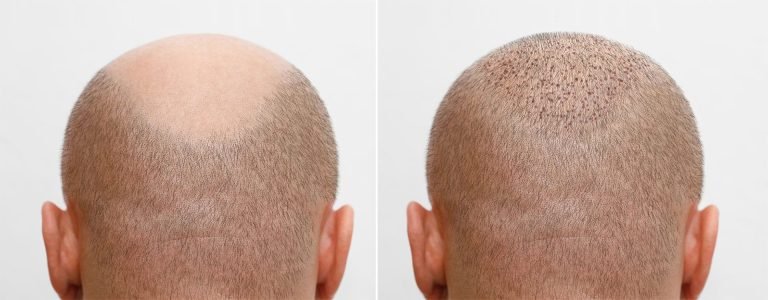
When hair loss is advanced and the roots in an area are gone, a hair transplant is the most lasting option. Healthy hair from the back of the head is moved to the thinning or bald area. Learn more about hair transplant in Jabalpur.
When Should You See a Hair Specialist?
Do not wait until you can see your scalp. Hair fall is much easier to control in the early stages. Book a visit with a dermatologist if:
- Hair fall has continued for more than 2 to 3 months
- You are losing hair in patches
- Your hairline or crown is visibly thinning
- You also have itching, redness or heavy dandruff
- You have irregular periods, weight changes or tiredness along with hair fall
A qualified hair specialist in Jabalpur can find the real cause and save you months of trying random products.
Hair Fall Treatment in Jabalpur at Ojas Clinic
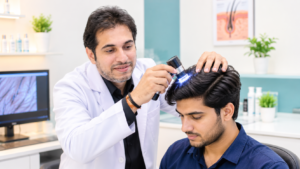
At Ojas Clinic, hair fall treatment starts with a proper consultation with an MD dermatologist. Dr. Hitesh Lokwani examines your scalp, understands your history and, if needed, advises tests to check for deficiencies or hormonal causes.
Based on this, you get a clear treatment plan. It may be medicines alone, or a combination with PRP, GFC, mesotherapy or laser. If you have advanced hair loss, the clinic also offers hair transplant. Everything is available under one roof at Narmada Road, so you do not have to visit different places for different treatments.
Frequently Asked Questions
Can hair fall be stopped completely?
In most cases, hair fall can be controlled once the cause is found and treated. Results depend on the cause, the stage of hair loss and how early you start.
How long does it take to see results?
Hair grows slowly, so most treatments take about 3 to 6 months to show clear results. Reduced shedding is usually the first sign.
Is PRP good for hair fall?
PRP can help with hair thinning and early pattern hair loss. It does not suit every cause, so a doctor should decide if you need it.
Does hair grow back after hair fall?
If the hair root is still alive, hair can grow back with the right treatment. Hair lost due to illness or stress often regrows on its own over a few months.
Which doctor should I see for hair fall?
A dermatologist is the right doctor for hair fall, as they are trained in skin, hair and scalp conditions.
What is the cost of hair fall treatment in Jabalpur?
The cost depends on the cause and the treatment plan. Book a consultation at Ojas Clinic to know the exact cost for your case.
Book Your Hair Fall Consultation
If hair fall has been bothering you for a while, a single consultation can give you clear answers. Visit Ojas Clinic for an honest check-up and a treatment plan made for you.
- Address: 304, 2nd Floor, 15/1 Ojas Imperia, Near Rampur Square, Narmada Road, Jabalpur – 482001 (M.P.)
- Phone / WhatsApp: +91 9522822111
- Timings: Monday to Saturday, 11 AM – 8 PM (Sunday closed)
Button: Book Consultation